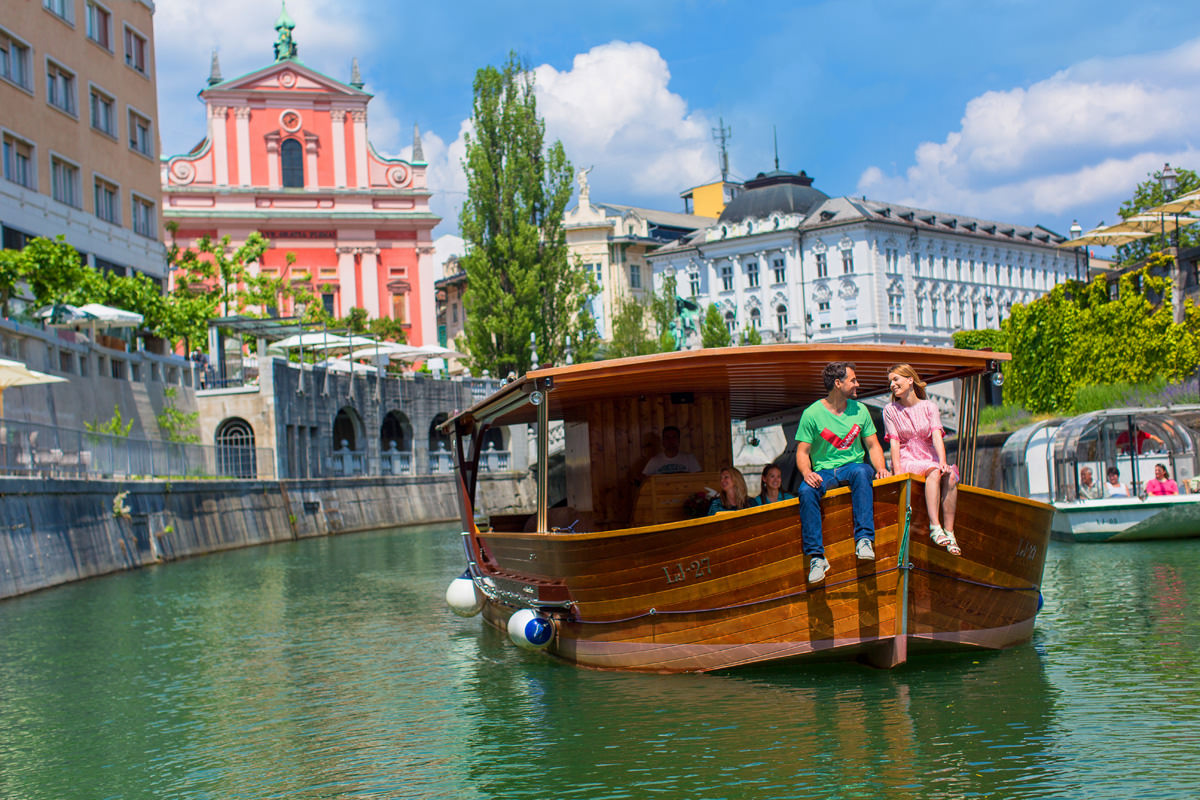
Ljubljana is a green sanctuary in central Europe


Ljubljana is a green sanctuary in central Europe. With the lovely Ljubljanica River flowing right through the city centre, and over 280,000 residents, Ljubljana is the political, administrative, cultural, and economic centre of Slovenia. The riverbank is home to numerous cafés, quality restaurants, and great shopping. The quality of life, and Slovenian hospitality make the standard of living here one of the highest in Europe. Ljubljana is also high on the list of the world’s most sustainable tourist destinations, clearly demonstrated by winning another honour — the Destination Award in the 2015 Tourism for Tomorrow Awards. However, the city’s ascension to the top wasn’t an easy one. The city was plagued with various problems that hindered quality of life, and many of these problems were environmental.


Ljubljana’s city centre, which was once home to a constant slew of cars and buses, is now mostly dedicated to pedestrians and cyclists. The city is also committed to continuously improving their public transportation system, in an effort to ensure that it is accessible and user-friendly for all passengers.


An astounding 73% of apartments in Ljubljana are heated by the city’s district heating system, which uses natural gas. This has resulted in greater fuel efficiency, and has helped improve energy efficiency. Air pollution in the city is 40 times lower than it was 20 years ago.

The city is the European capital with the highest share of separated waste that is collected, at 63%. It is also the first capital in the EU to take part in Europe’s Zerowaste program, which aims to reconfigure our society. Their goal is to ban items that cannot be repaired, composted, or recycled (or re-designed to be able to do any of the three), from entering European markets.

https://www.youtube.com/watch?v=_OUH2ngW13o


While there are several other initiatives that have been promoted across the city, the main driver behind the city’s continued success is the people. Every individual living here goes beyond following the environmental “rules” that are set in place, and aren’t driven because of winning the Green Capital award – there is a true passion and love that is ingrained in the community towards achieving a green lifestyle. Even visitors feel the community’s love for their city, the environment, and for the Earth, and leave feeling inspired and committed towards making their hometowns as green as possible.

Comments

Popular posts from this blog

The costume of Gorenjska, which is one of the traditional regions of Slovenia

  The costume of the region of Gorenjska in Slovenia. In English, this region is sometimes called Upper Carniola. Slovenia is the northernmost part of the former Yugoslavia. The capitol is Ljubljana, and this is their flag. The Slovenian language has around 50 dialects, spoken throughout Slovenia, and in neighboring parts of Italy, Austria, and Hungary. On the southern border, the Slovenian language intergrades with the Kaj dialects of Croatia. In fact, the Kaj dialects are closer to Slovene than they are to the Shto dialect of Beograd. The Slovenes calle their nation Slovensko, which is confusing, because the Slovaks also call their nation Slovensko. Be careful of this, I have seen Slovaks online identified as Slovenian because of this.                                                                  The ...

Christmas Decorations in Slovenia

The creation of nativity scenes is a tradition in Slovenia that dates back several hundred years. Though the creation of nativity scenes to display in the home is common, live publicly viewable nativity scenes have grown in popularity. The best-known live nativity scenes are those in Postojna Cave and at Ljubljana's Franciscan Church on Prešeren Square. Christmas trees are decorated in Slovenia, more often now with purchased decorations than with homemade decorations like in olden times. Evergreen decorations and wreaths are also seen in Slovenia during Christmas time. Santa Claus in Slovenia Slovenia's Santa Claus tradition pulls from many other European traditions. Children in Slovenia can receive gifts from St. Nicholas, Baby Jesus, Santa Claus, or Grandfather Frost. St. Nicholas visits on St. Nicholas Day, December 6. Santa Claus or Baby Jesus visits on Christmas, and Grandfather or Father Frost may appear at the New Year.  Other Christmas Tr...

Hiiumaa Military Museum

The Hiiumaa Military Museum was established in 2007 in the former border guard station of Tahkuna. The museum takes pride in its collection of coastal defense cannons – featuring 180 mm, 130 mm and 100 mm cannon barrels. The outdoor exhibition includes armoured personnel carriers BTR-70, BRDM-2, ZIL-157, GAZ-66 and other vehicles, a reconstruction of the border strip, civil defence shelter, border guard speedboat, sea mines, anti-tank gun, border guard viewing platform, radar and radio masts.  The diesel house features a fully equipped diesel generator, as well as fuel tanks and canisters. In the museum's main building, the preserved marine observation radar, in use until 2005, still stands in its original place. The museum has held exhibitions of cannon projectiles and shell casings, helmets, hats and uniforms, communication devices, educational posters, and civil defence equipment. It also has a furnished barracks corner with an iron bunk bed, a Communist dedicati...