Italian Village Wants to Pay You to Move There

Related image


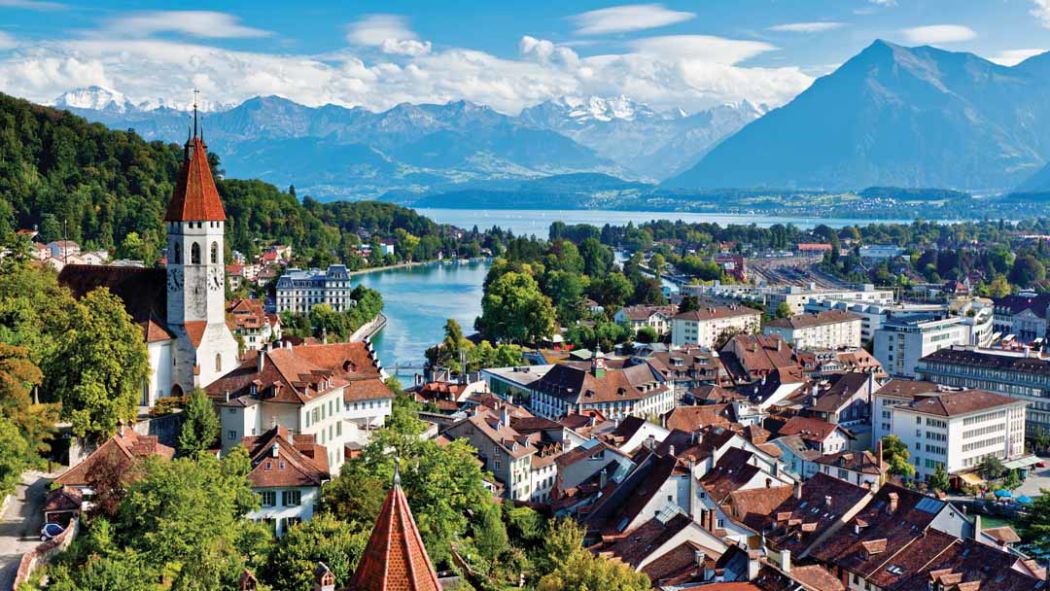
                                       Bormida, a mountain village with a population of just 394, is weighing a plan to offer €2000 ($2,186) to people who transfer their residence there. And once you're there, you can pay as little as €50 ($55) in rent each month for a small place to live. For a larger place, rent would cost €120 ($131). The population of Bormida has been dwindling lately, and the town's mayor, Daniele Galliano, proposed the idea as a way to keep the town going.

Galliano posted on Facebook about the plan, emphasizing it's still just that: a plan, and nothing is set in stone. The cheap rent part will be ready in about two months, but the cash bonus is still just an idea he's been floating around, The Independent notes. But because the media frenzy is so crazy now, he joked that he'll have to learn English. 

Of course, you'd still have to find a job if you move to Bormida — and you'd have to deal with the boredom that comes with living in a remote area; the nearest city, Genoa, is 50 miles away. But the area is so beautiful and quaint that it just might be worth it.

For now, there's a main street with four restaurants, a bed and breakfast, and a post office that opens three times a week.

"There is nothing much to do here," the manager of the Odd one Giuseppe restaurant told the Guardian. "But life is so simple and natural, we have forests, goats, the church, and plenty of good food. Life would definitely be free of stress."

Comments

Popular posts from this blog

The costume of Gorenjska, which is one of the traditional regions of Slovenia

  The costume of the region of Gorenjska in Slovenia. In English, this region is sometimes called Upper Carniola. Slovenia is the northernmost part of the former Yugoslavia. The capitol is Ljubljana, and this is their flag. The Slovenian language has around 50 dialects, spoken throughout Slovenia, and in neighboring parts of Italy, Austria, and Hungary. On the southern border, the Slovenian language intergrades with the Kaj dialects of Croatia. In fact, the Kaj dialects are closer to Slovene than they are to the Shto dialect of Beograd. The Slovenes calle their nation Slovensko, which is confusing, because the Slovaks also call their nation Slovensko. Be careful of this, I have seen Slovaks online identified as Slovenian because of this.                                                                  The ...

Christmas Decorations in Slovenia

The creation of nativity scenes is a tradition in Slovenia that dates back several hundred years. Though the creation of nativity scenes to display in the home is common, live publicly viewable nativity scenes have grown in popularity. The best-known live nativity scenes are those in Postojna Cave and at Ljubljana's Franciscan Church on Prešeren Square. Christmas trees are decorated in Slovenia, more often now with purchased decorations than with homemade decorations like in olden times. Evergreen decorations and wreaths are also seen in Slovenia during Christmas time. Santa Claus in Slovenia Slovenia's Santa Claus tradition pulls from many other European traditions. Children in Slovenia can receive gifts from St. Nicholas, Baby Jesus, Santa Claus, or Grandfather Frost. St. Nicholas visits on St. Nicholas Day, December 6. Santa Claus or Baby Jesus visits on Christmas, and Grandfather or Father Frost may appear at the New Year.  Other Christmas Tr...

Hiiumaa Military Museum

The Hiiumaa Military Museum was established in 2007 in the former border guard station of Tahkuna. The museum takes pride in its collection of coastal defense cannons – featuring 180 mm, 130 mm and 100 mm cannon barrels. The outdoor exhibition includes armoured personnel carriers BTR-70, BRDM-2, ZIL-157, GAZ-66 and other vehicles, a reconstruction of the border strip, civil defence shelter, border guard speedboat, sea mines, anti-tank gun, border guard viewing platform, radar and radio masts.  The diesel house features a fully equipped diesel generator, as well as fuel tanks and canisters. In the museum's main building, the preserved marine observation radar, in use until 2005, still stands in its original place. The museum has held exhibitions of cannon projectiles and shell casings, helmets, hats and uniforms, communication devices, educational posters, and civil defence equipment. It also has a furnished barracks corner with an iron bunk bed, a Communist dedicati...